How I Obtained Mew in Pokémon Red on a Real Game Boy
I built a USB device that emulates a Game Boy over the link cable and used it to inject a fully valid Mew into Pokémon Red. All code available on GitHub.
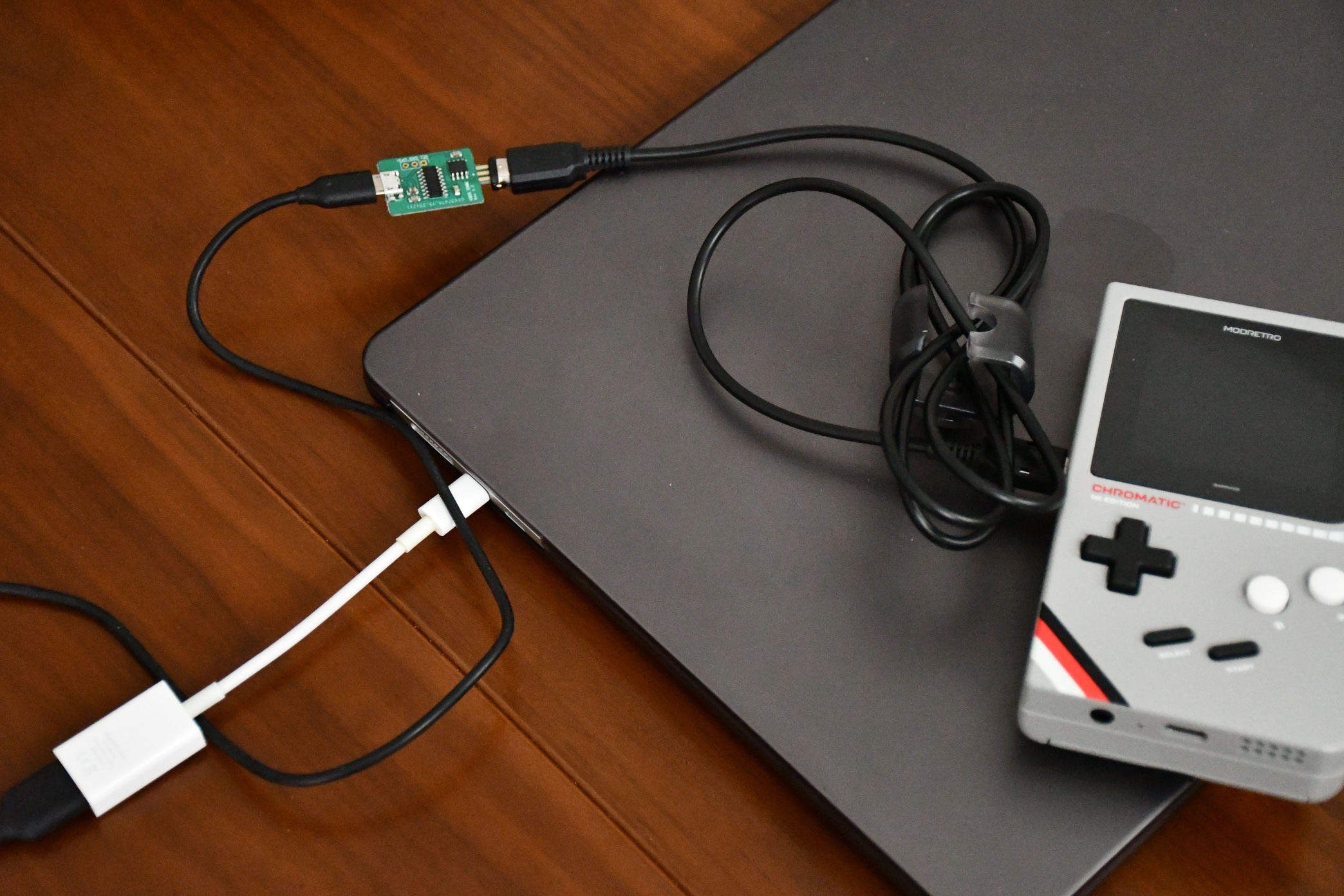
If you grew up with Pokémon Red/Blue/Yellow, you probably remember Mew. Not the one you caught (because you didn’t), but the one you heard about. The one your friend’s cousin totally had. The one that was supposedly hiding under a truck if you used Strength at just the right moment. For most players, Mew was unobtainable unless you attended a distribution event or used a GameShark (which kinda feels like cheating). More recently, methods exist to manipulate the game’s memory using in-game glitches to cause Mew to appear (with some limitations)! Having previously poked around the trade logic of these Pokémon games, I wanted to see if I could trick a real Game Boy into trading me a Mew that had never actually existed.
What Pokémon Trading Actually Looks Like
Pokémon Red/Blue/Yellow’s trade system is quite simple and has been well documented by others. When two Game Boys connect to trade Pokémon over a link cable, the first system to initiate the interaction becomes the primary Game Boy, while the other acts as the secondary. Both sides start off by repeatedly transmit menu state information until the Trade option is selected, at which point both players begin exchanging party information. Each Game Boy sends its data to the other in three consecutive data blocks: a 10-byte random seed (used to synchronize random events and animations), a 418-byte party data structure that lists information on each Pokémon, and a patch list used to work around limitations of the Game Boy’s serial protocol. Certain byte values (like 0xFE) have special meanings on the link cable and cannot be transmitted directly. When those values appear inside the party data, they are omitted during transmission and later reinserted using a list of offsets. Each data block is preceded by an arbitrary number of 0xFD preamble bytes to mark boundaries. A few more menu state transmissions follow until a pair of Pokémon are successfully traded.
Party Data Layout
The Pokémon party data itself is sent as a fixed-layout block of memory (credit to Bulbapedia) and looks like this:
| Name | Length (bytes) | Comment |
|---|---|---|
| Player Name | 11 | Terminated with 0x50 |
| Size of Pokémon Party | 1 | Maximum of 6 |
| Pokémon Species IDs | 7 | List terminated with 0xFF, padded with 0x00 if less than 6 Pokémon |
| Pokémon #1 | 44 | First Pokémon’s data including Species ID, Pokémon Type, HP, etc. |
| … | 44 | … |
| Pokémon #6 | 44 | Last Pokémon’s data |
| Nicknames | 66 | 11 bytes each, terminated with 0x50 |
| Original Trainer Names | 66 | 11 bytes each, terminated with 0x50 |
| ??? | 3 | Unknown |
Crucially, the trade system does not attempt to validate where this data comes from. It only cares that it arrives in the correct format and passes basic consistency checks. If the received bytes are structurally valid, the game accepts them without question. Editing these values makes it possible to “trade” a Mew.
The Missing Link
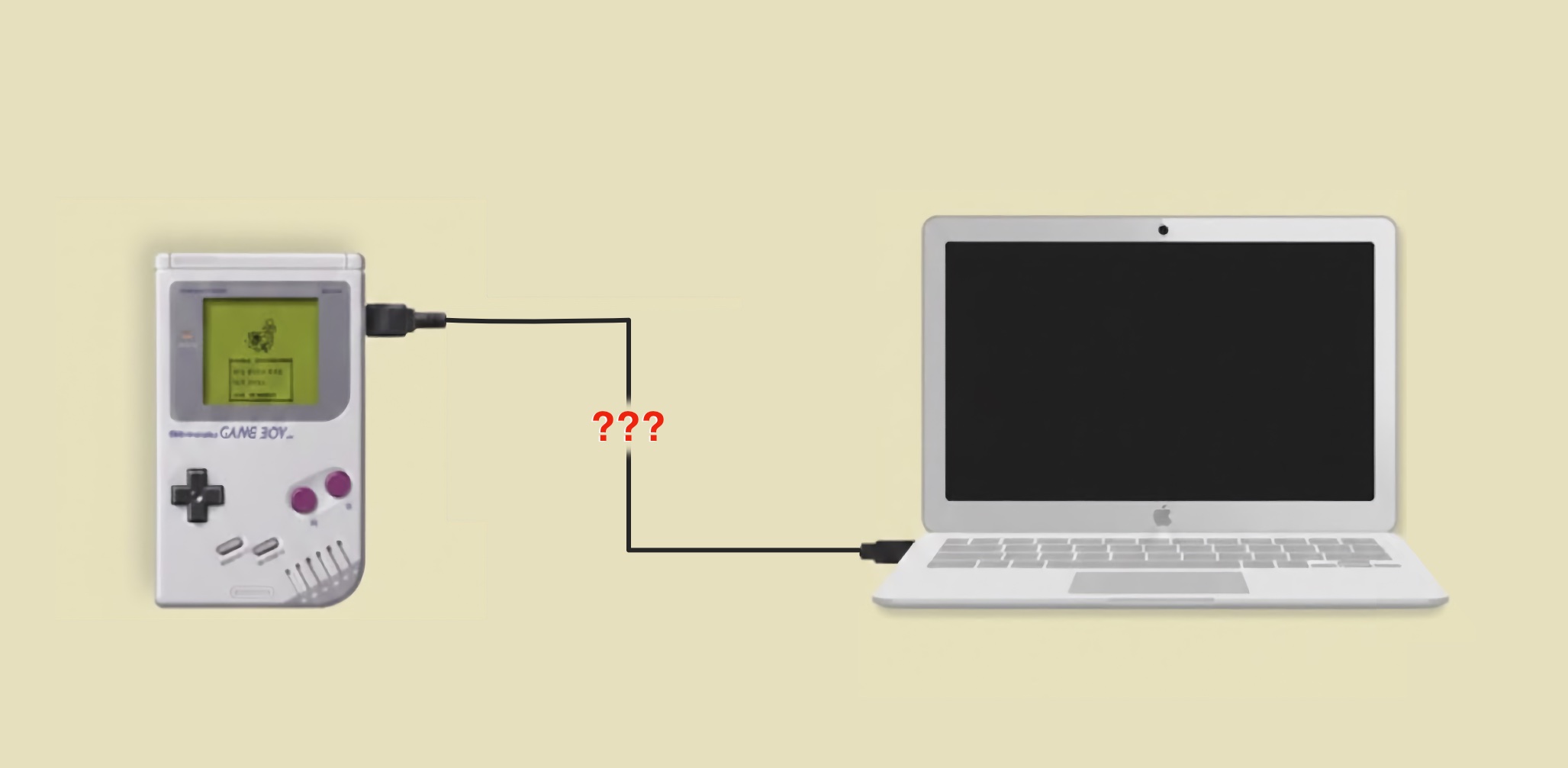
Pokémon trades were designed to happen over the Game Boy Link Cable — a simple, peer-to-peer serial interface intended to connect two handhelds sitting next to each other. In my previous post, I had used an Arduino to mimic this serial communication and hardcoded the trade responses directly on the microcontroller. I wanted a bit more flexibility and wondered if I could send data from my computer instead, to make this more extensible and easier to iterate with. To do that, I needed a device that physically connects to the Link Port, understands the serial timing, and exposes the exchange to a modern computer in a controllable way. So I designed one:
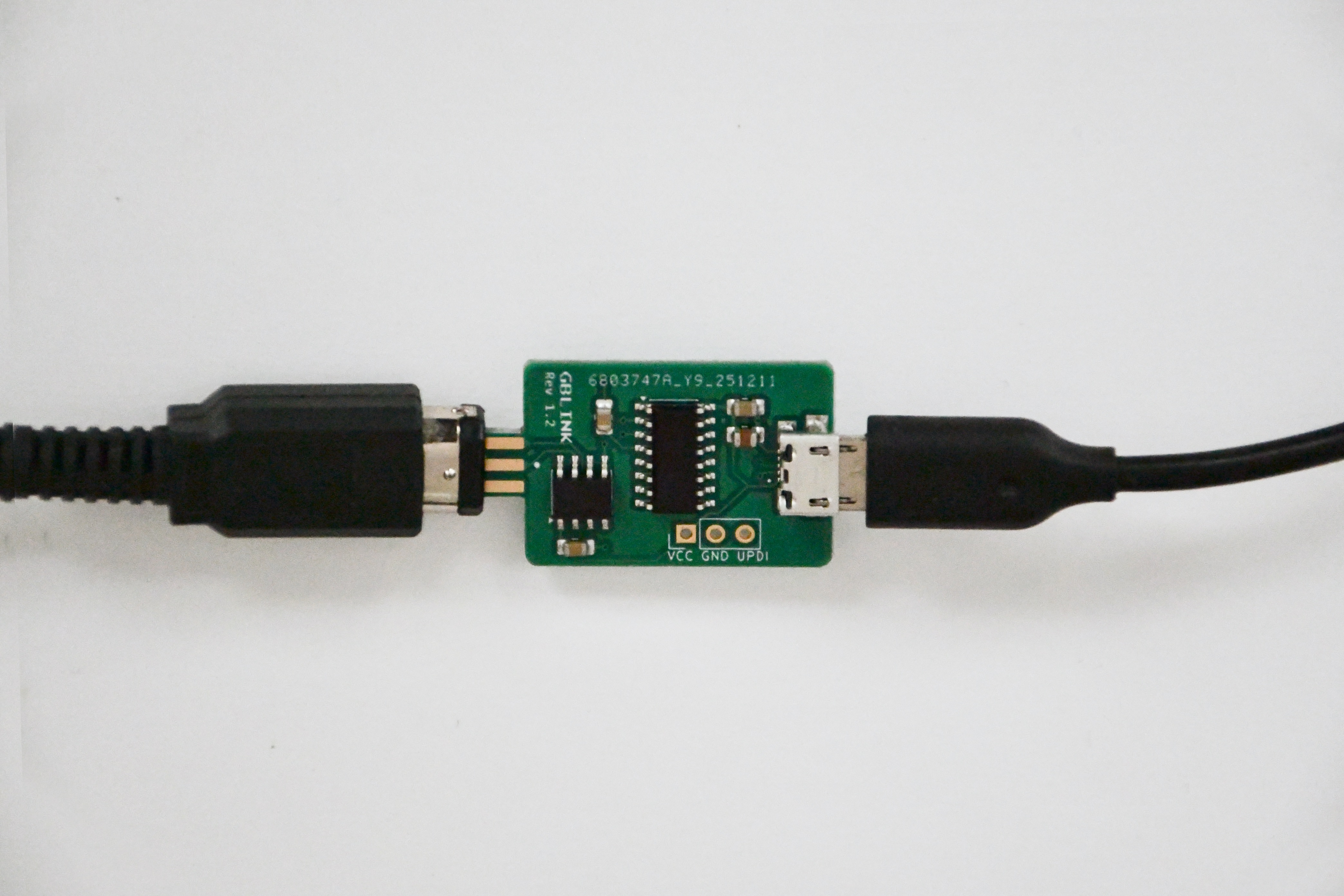
The result is a small PCB that bridges the Game Boy Link Port to a standard UART interface, which can then be connected to a PC over USB. A low-power ATtiny412 microcontroller handles real-time link protocol timing. The Game Boy sees a perfectly valid link partner, while the computer sees a simple serial device. From the Game Boy’s perspective, it’s just trading with another handheld. From the PC’s perspective, it’s just talking bytes over a serial port. I called it GBLink.
Trading a Mew That Never Existed
Armed with a freshly built GBLink, I wrote a program on the host (PC) side that simply echoes back whatever it receives from the real Game Boy. This allows me to get surprisingly far into the trading process. It’s enough to capture a full dump of the data exchanged between the two Game Boys, which gave me something concrete to examine:
...
 60 60 00 00 fd fd fd fd  fd fd fd fd e6 6b f2 7b  # random seed
 05 91 1f af 41 d5 fd fd  fd fd fd fd fd fd fd 81  # party starts
 8b 94 84 50 86 80 91 98  50 89 01 b1 ff 00 00 00
 00 00 b1 00 18 00 00 15  15 2d 21 27 00 00 d6 d3  # pokemon 1
 00 01 1f 00 c3 00 f0 00  cc 01 1d 00 c3 18 b9 23
 1e 00 00 07 00 18 00 0c  00 0f 00 0c 00 0d 00 00
 00 00 00 00 00 00 00 00  00 00 00 00 00 00 00 00
 00 00 00 00 00 00 00 00  00 00 00 00 00 00 00 00
 00 00 00 00 00 00 00 00  00 00 00 00 00 00 00 00
 00 00 00 00 00 00 00 00  00 00 00 00 00 00 00 00
 00 00 00 00 00 00 00 00  00 00 00 00 00 00 00 00
 00 00 00 00 00 00 00 00  00 00 00 00 00 00 00 00
 00 00 00 00 00 00 00 00  00 00 00 00 00 00 00 00
 00 00 00 00 00 00 00 00  00 00 00 00 00 00 00 00
 00 00 00 00 00 00 00 00  00 00 00 00 00 00 00 00
 00 00 00 00 00 00 00 00  00 00 00 00 00 00 00 00
 00 00 00 00 00 00 00 00  00 00 00 00 00 00 00 00
 00 00 00 00 00 00 00 00  00 00 00 00 00 00 00 00
 00 00 00 00 00 00 00 00  00 00 00 00 00 00 00 00
 00 00 00 00 00 00 00 00  00 00 81 8b 94 84 50 86  # OT
 80 91 98 50 89 00 00 00  00 00 00 00 00 00 00 00
 00 00 00 00 00 00 00 00  00 00 00 00 00 00 00 00
 00 00 00 00 00 00 00 00  00 00 00 00 00 00 00 00
 00 00 00 00 00 00 00 00  00 00 00 00 92 90 94 88  # nicknames
 91 93 8b 84 50 50 50 00  00 00 00 00 00 00 00 00
...
Full trade dump available here.
At first glance, it might seem like obtaining Mew is as simple as swapping the Pokémon species ID of a replayed trade exchange, and that’s only somewhat true. But we also need to update a few other fields such as the Pokémon’s type and its list of moves to line up with what a “real” Mew would have. Also, to make the Mew compatible with other games like Poké Transporter, we must modify the Original Trainer name and Trainer ID to specific expected values, otherwise this Mew would not be tradable. This is a limitation of other methods of obtaining this mythical Pokémon. I also wanted the trade implementation to be robust and extensible so others could experiment with it.

After mapping the data exchanged, as well as deciphering most of the menu options that are used to transition before and after trading, I was able to start putting together a state machine for Pokémon trades. I wrote a Python program on the host side that opens a UART connection for the GBLink, waits for the other Pokémon game’s link handshake, and enters a state machine to handle the data exchange. The cartridge responds to the output and progresses its own trading state machine until we finally inject a custom party data block containing a handcrafted Mew from the host into the Game Boy:
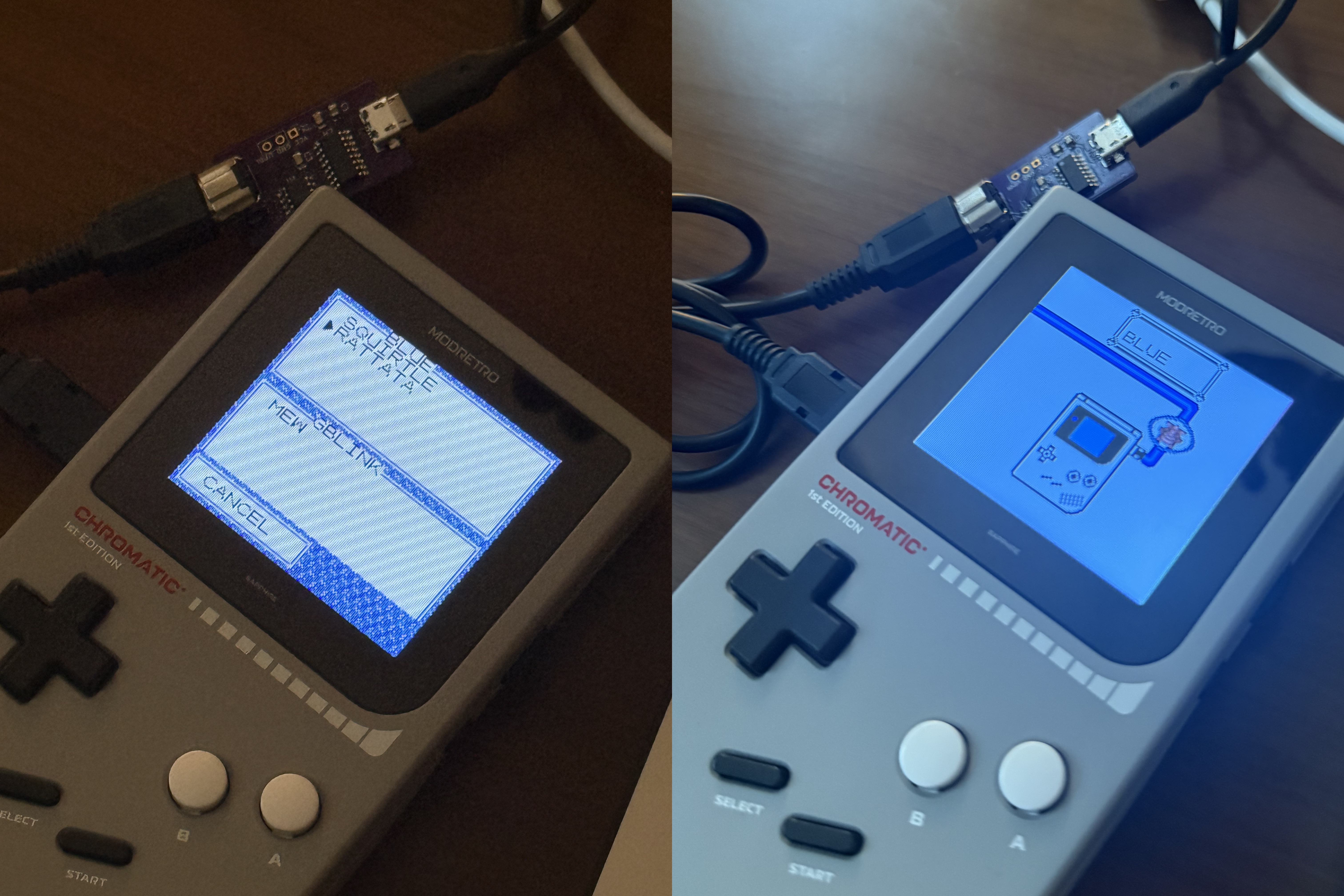
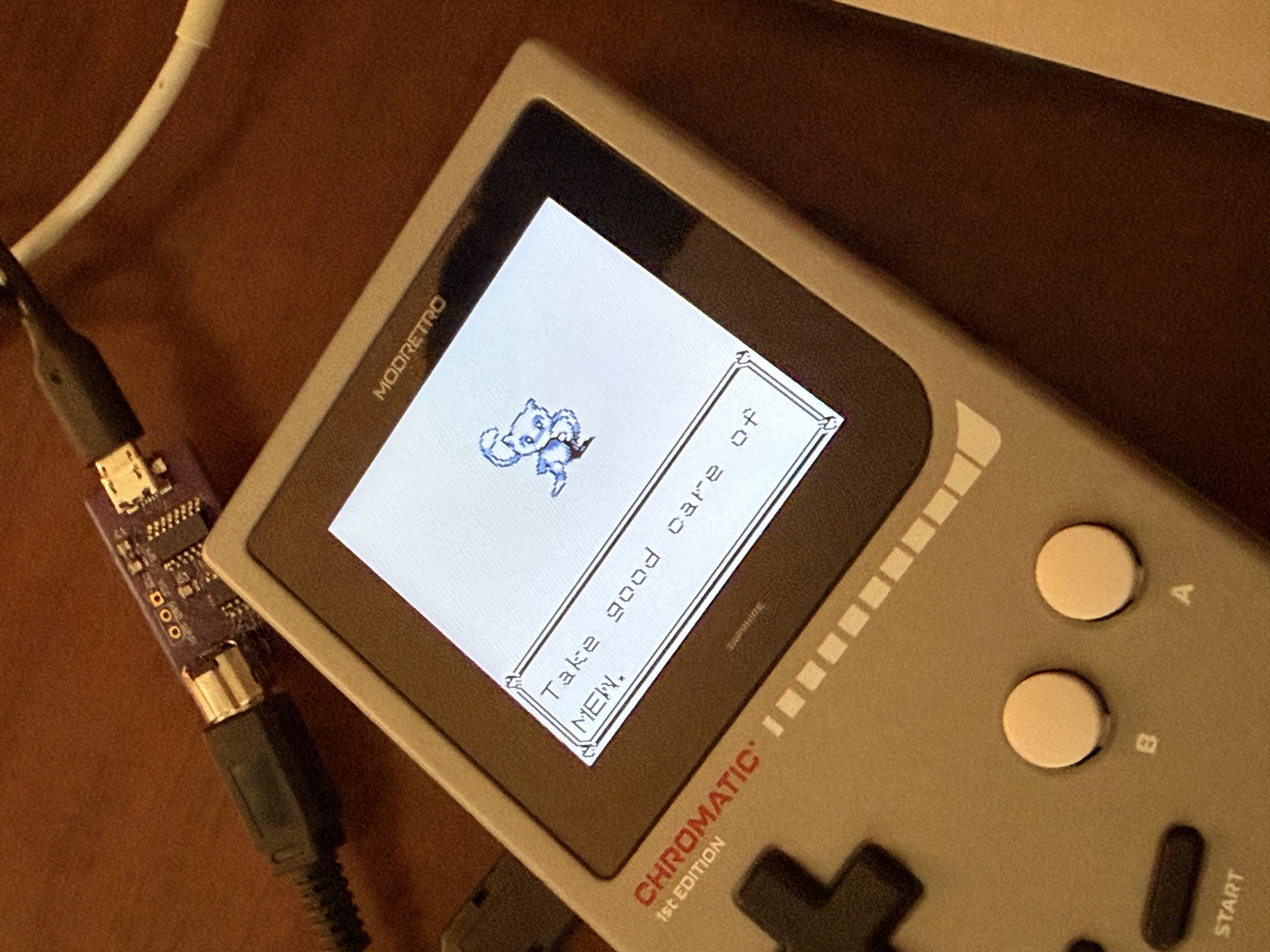
Then it’s time to run the trade for real. I offer a level 3 Rattata in exchange for the GBLink’s mythical Pokémon. The animations play. The trade completes. Nothing crashes. And suddenly, there’s a Mew in my party. Just a normal trade — with a partner that doesn’t exist.
Closing Thoughts
Back when these games were first released, Mew felt mythical. Today, with a little hardware and a lot of curiosity, it turns out Mew was never hiding under a truck, but in plain sight, waiting for the right bytes to be sent over a link cable.
⭐ I made a small batch of these GBLink devices that you can buy on my Tindie page!